








What is Nexen EMS?
Our Nexen Energy Management System (EMS) is a comprehensive platform for monitoring, analyzing, and optimizing the consumption of electricity and other utilities such as water, gas, heat, compressed air, and technical gases. It combines smart metering, real-time analytics, automation, and sustainability reporting into one integrated solution.
At Fabrity, we deliver end-to-end EMS deployments—from field devices and data acquisition to integration with enterprise systems (ERP, MES, SCADA, BMS) and advanced analytics in the cloud.
Key features of Nexen EMS
Multi-utility monitoring
Track electricity, gas, water, heat, compressed air, and technical gases in one system.
Power quality analysis
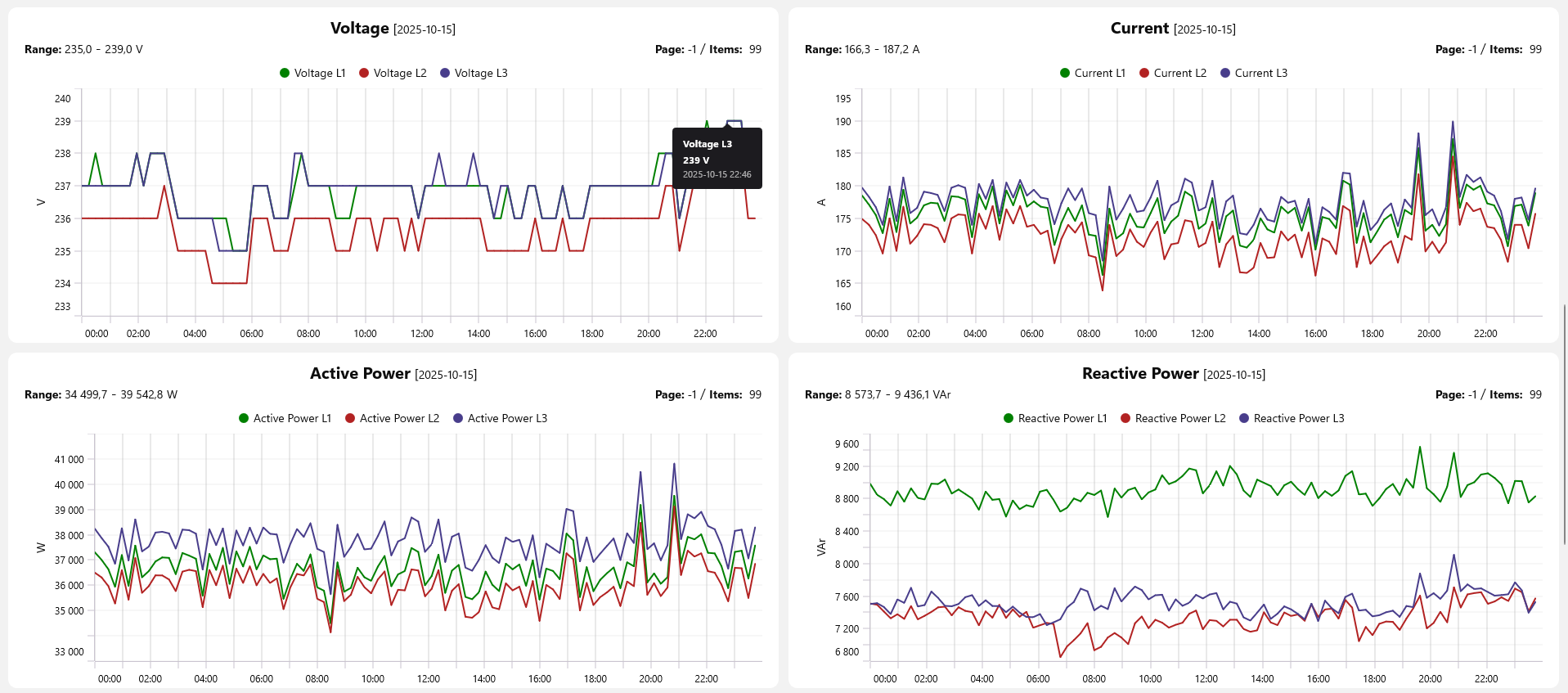
Monitor voltage, frequency, reactive power, phase angles, power factor and more.
Power Guard
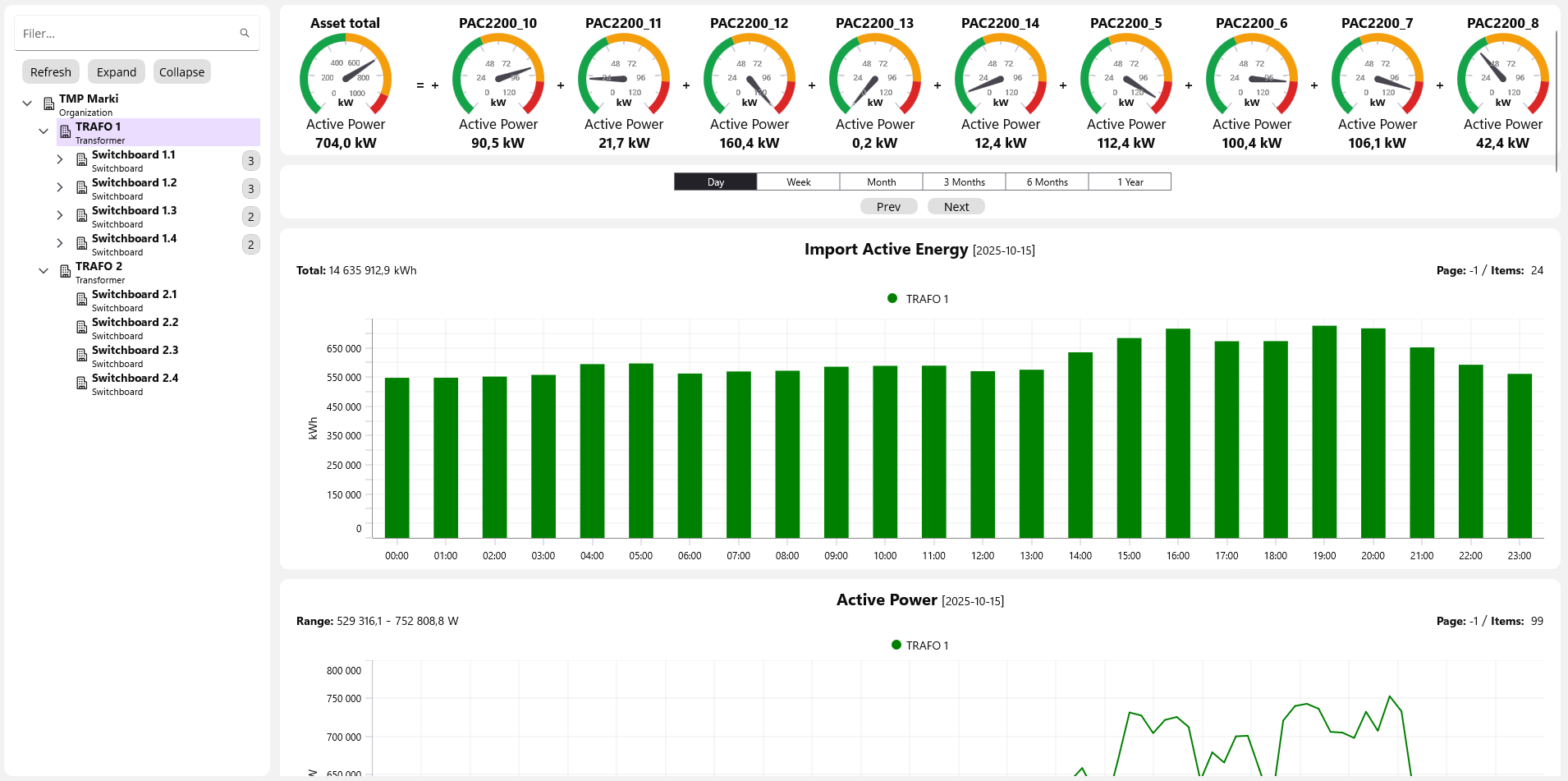
Monitors active power minute by minute and alerts when limits are near or exceeded, preventing penalties and ensuring energy stability.
Optimization of contracted power
Helps define the real power profile and select the optimal contracted capacity, preventing oversizing and unnecessary costs.
Advanced live monitoring
Tracks dozens of parameters per meter in real time, providing deep insights into energy performance and equipment efficiency.
Multi-location monitoring
Provides centralized monitoring and analysis across multiple sites.
ESG and ISO 50001 compliance
Fully aligned with ISO 50001 energy management standards and ESG reporting frameworks.
Vendor-neutral integration
Integration with devices from multiple manufacturers (e.g., Siemens, Eastron, Advantech, Weidmüller).
Wide protocol support
Supports numerous communication protocols including Modbus, M-Bus, LoRa WAN, and Bluetooth.
System integrations
Connect seamlessly via API to BMS, SCADA, MES, ERP, SAP, and other enterprise systems.
Flexible deployment
Available as a cloud-based (Azure) or on-premises solution.
Cross-platform accessibility
Access via web, desktop, or mobile applications.
Business benefits of Nexen EMS
Prevent power exceedance penalties
Nexen EMS continuously monitors active power consumption and alerts operators when limits are approaching, helping organizations prevent contracted power exceedances and avoid costly penalties.
Reduce energy costs
By identifying inefficiencies and optimizing energy usage across processes and facilities, Nexen EMS helps organizations lower overall energy expenses and improve cost efficiency.
Eliminate reactive power surcharges
Continuous monitoring and optimization of reactive power help maintain proper power factor levels, preventing utility penalties that can significantly increase electricity bills.
Improve energy efficiency of production processes
By correlating energy consumption with production data, Nexen EMS enables companies to identify inefficiencies, optimize operations, and improve energy intensity across production lines.
Increase operational visibility and control
Real-time monitoring, alerts, and analytics provide full transparency into energy performance, enabling faster response to anomalies and more informed operational decisions.
Improve reliability and lifespan of electrical infrastructure
Better power quality management reduces stress on transformers, cables, and electrical equipment, helping extend asset lifespan and reduce the risk of failures.
Power Guard—active power limit control with Nexen EMS
In industrial facilities, exceeding contracted active power limits leads to costly penalties and operational disruptions. Maintaining power within defined thresholds is essential to control energy expenses and ensure network stability. key challenges include:
- Exceeding contracted active power limits, resulting in penalty charges.
- Lack of real-time awareness of approaching power thresholds.
- Difficulty forecasting power peaks during production cycles.
- Inability to automatically reduce or delay noncritical loads when limits are near.
- Manual monitoring that leads to delayed responses and unnecessary costs.
The solution: Nexen EMS power guard functionality
Nexen EMS introduces a dedicated Power Guard feature designed to continuously monitor active power and alert operators when predefined thresholds are approached or exceeded.
How it works:
- Real-time monitoring: Continuously tracks total active power across the facility, providing minute-by-minute insights into energy performance.
- Threshold-based alerts: Sends instant notifications (via SMS, email, or system dashboard) when power consumption reaches predefined warning or critical levels.
- Predictive peak detection: Uses trend analysis and historical data to forecast when active power will likely exceed the limit, allowing proactive intervention.
- Automated load control: Optionally integrates with control systems to temporarily reduce or shift nonessential loads (e.g., HVAC systems, auxiliary equipment) when thresholds are near.
- Customizable settings: Enables defining multiple limit levels (e.g., warning, critical, emergency) per production line, shift, or site.
- Integration with Nexen Predict: Combines with predictive analytics to anticipate power peaks based on production schedules, weather, or process data.
- Optimization of contracted power: Helps define the real power profile and select the optimal contracted level. Prevents oversizing that often costs more than occasional exceedance penalties.
Result:
With Nexen EMS Power Guard, companies can prevent power limit exceedances, reduce penalties, and ensure stable, efficient, and cost-effective energy management.
Reactive power optimization with Nexen EMS
In industrial facilities, efficient energy management begins with understanding active and reactive power. While active power performs useful work, reactive power—though necessary for the operation of motors, transformers, and lighting systems—does not contribute to production.
Reactive power comes in two forms:
- Inductive reactive power generated by motors, transformers, and induction furnaces.
- Capacitive reactive power produced by LED lighting, UPS systems, long cables, and PV inverters.
When tg φ exceeds 0.4 or cos φ drops below 0.9, a power system becomes inefficient. Utilities then apply penalties for excessive reactive energy, both inductive and capacitive often adding 30–40% to the total electricity bill.
Consequences of excessive reactive power:
- Higher electricity costs and surcharges.
- Lower overall energy efficiency.
- Increased transmission losses and overheating.
- Transformer and cable overloads.
- Voltage fluctuations and poor power quality.
- Shortened equipment lifespan and risk of failure.
The Solution: Nexen EMS

Nexen EMS provides a complete solution for measurement, analysis, and optimization of reactive power. It continuously tracks cos φ, tg φ, voltage, current, and other power parameters—helping identify inefficiencies and sources of reactive power.
How it works:
- Monitors energy performance in real time.
- Automatically compensates or stores reactive power using capacitor banks or hybrid systems.
- Helps to maintain tg φ ≤ 0.4 and cos φ ≥ 0.9 to avoid penalties.
- Improves power quality and network stability.
- Extends the lifespan of your electrical infrastructure.
Result:
Lower costs, higher efficiency, and full control of your energy performance. With Nexen EMS, reactive power management turns from a hidden expense into a measurable business advantage.
Energy optimization of production processes with Nexen EMS
In manufacturing, energy consumption represents one of the highest operating costs. Yet its optimization poses many challenges:
- Limited insight into energy usage by process or production line.
- Inability to track consumption trends or calculate performance differences.
- Power peak exceedances leading to costly penalties.
- No clear correlation between energy use and production output.
- Lack of defined KPIs and benchmarks to monitor improvement.
The Solution: Nexen EMS

Nexen EMS provides a complete, data-driven approach to monitoring, analyzing, and optimizing energy use across production processes. It transforms raw consumption data into actionable insights that directly improve efficiency and reduce costs.
How it works:
- Real-time visibility: Track energy usage by production line, process, or shift to identify inefficiencies and hidden losses.
- Trend analysis and benchmarking: Compare energy consumption over time to identify patterns, measure how usage changes between periods, and detect unusual spikes or drops that may indicate anomalies or inefficiencies.
- Peak load control: Monitor and manage peak power demand to prevent costly exceedances and grid overloads.
- Production–energy correlation: Integrate production data with energy metrics to measure true process efficiency and optimize schedules.
- Key performance indicators (KPIs): Define and monitor key metrics such as energy intensity (kWh per ton of product or per shift), cost efficiency, and compliance with predicted energy price trends.
- Data-driven decision-making: Use precise measurements to assign energy costs to specific products, processes, or shifts, enabling better budgeting and accountability.
Result:
With Nexen EMS, manufacturers can make smarter operational decisions, align production with energy economics, and achieve measurable improvements in efficiency, cost reductions, and improved sustainability.
Environmental monitoring in warehouses
In warehouse environments, maintaining stable environmental conditions is critical for protecting goods, ensuring regulatory compliance, and maintaining safe working conditions. However, managing these parameters across large facilities presents several challenges:
- Limited visibility into temperature, humidity, and air quality across different warehouse zones.
- Risk of product damage due to unnoticed environmental deviations.
- Lack of continuous monitoringL required for regulatory compliance (e.g., GDP for pharmaceutical and food storage).
- Difficulty detecting HVAC failures or ventilation issues before they impact stored goods.
- Limited monitoring of air quality and harmful gases in areas with heavy forklift traffic or chemicals.
The Solution: Nexen EMS
The solution: Nexen EMS
Nexen EMS provides a comprehensive platform for continuous environmental monitoring across warehouse facilities. By integrating networks of wireless or wired sensors, the system collects and analyzes data on temperature, humidity, CO₂ levels, particulate matter, and gas concentrations.
How it works:
- Continuous environmental monitoring: Sensors measure temperature, humidity, CO₂, particulate matter, and gas concentrations across warehouse zones in real time.
- Automated alerts: The system immediately notifies operators when environmental parameters exceed predefined thresholds, enabling rapid response.
- Compliance-ready monitoring: Maintains a complete historical record of environmental data, supporting audits and regulatory inspections such as GDP compliance.
- HVAC performance visibility: Detect deviations in environmental conditions early, helping identify HVAC issues before they affect stored goods.
- Worker safety monitoring: Monitor air quality and harmful gases in areas with high forklift activity or chemical storage.
- Flexible sensor connectivity: LoRaWAN connectivity enables coverage across large warehouse spaces without extensive cabling, allowing fast deployment without operational disruption.
Result:
With Nexen EMS environmental monitoring, warehouse operators gain continuous visibility into storage conditions and air quality. This helps protect sensitive goods, improve worker safety, ensure regulatory compliance, and prevent operational disruptions caused by unnoticed environmental issues
Monitoring transport conditions for sensitive goods
In logistics operations, maintaining proper environmental conditions during transport is critical for protecting sensitive goods such as food, pharmaceuticals, and chemicals. However, ensuring stable conditions across vehicles and routes presents several operational challenges:
- Limited visibility into temperature and humidity conditions during transport.
- Risk of product spoilage due to unnoticed deviations from required storage conditions.
- Lack of continuous monitoring required for regulatory compliance in food and pharmaceutical logistics.
- Delayed response to refrigeration failures or environmental anomalies.
- Difficulty tracking cargo location and condition simultaneously across the logistics network.
The Solution: Nexen EMS
How it works:
- Real-time environmental monitoring: Sensors track temperature and humidity conditions throughout the transport process to ensure goods remain within safe thresholds.
- Location and cargo tracking: GPS and LoRaWAN technologies provide real-time visibility into vehicle and cargo location across routes.
- Automated alerts: Immediate notifications are triggered when environmental parameters exceed predefined limits or when route deviations occur.
- Compliance-ready data history: The system maintains a complete historical record of transport conditions, supporting regulatory requirements for food and pharmaceutical logistics.
- Route and transport analytics: Analyze transport performance, route efficiency, and operational risks using collected data.
- Early detection of equipment issues: Identify refrigeration or environmental control failures before they lead to cargo damage.
Result:
With Nexen EMS, logistics operators gain continuous visibility into both cargo conditions and transport operations. This helps prevent product spoilage, ensure regulatory compliance, improve operational efficiency, and deliver sensitive goods safely across the supply chain.
Book a call
Discover how Nexen Suite can help you get there.
Blog

OEE: A basic KPI for optimizing manufacturing processes
OEE (overall equipment effectiveness) is a key KPI for optimizing manufacturing, reducing downtime, improving quality, and boosting production efficiency.

Industrial Internet of Things (IoT) trends for 2026
Explore IoT trends for 2026: LoRaWAN connectivity, AI-powered predictive maintenance, smart energy management, computer vision, and IIoT cybersecurity.

Industrial data acquisition for energy management—how we do it at Fabrity
Industrial data acquisition for energy management in brownfield factories—connect meters, close gaps, and turn readings into KPIs with Nexen Suite.